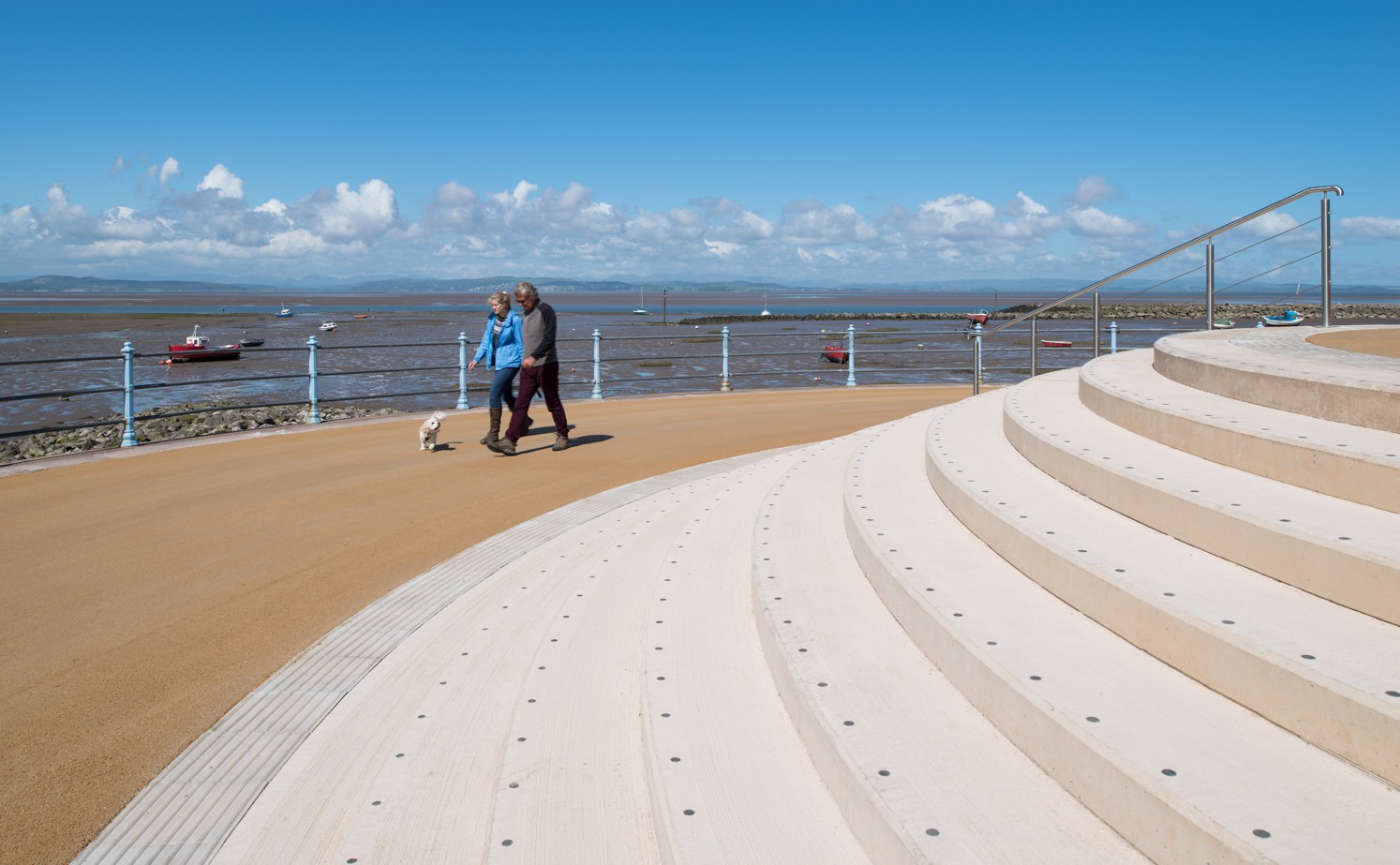
In coastal engineering, sustainability, and community protection, the Morecambe Wave Reflection Wall Replacement sets a new standard for UK marine infrastructure. This 1.2km coastal defence structure – delivered through NEC4 contracting – combines robust engineering with ecological sensitivity to safeguard 5,000+ homes and businesses from tidal surges while enhancing the promenade’s public realm.
The project’s innovative use of locally quarried limestone (reducing transport emissions by 40%) and interlocking precast units withstands 8-tonne wave impacts while creating marine habitats. Our phased construction approach maintained continuous coastal protection throughout tidal works, with real-time monitoring ensuring millimeter precision in wall alignment.
Key sustainability achievements include:
- 100% fossil-fuel-free construction plant (biofuel-powered cranes/rigs)
- Enhanced marine biodiversity through textured surface designs
- 50-year design life exceeding Environment Agency standards
The interlocking precast units and curved alignment enhance the wall’s sustainability performance, creating sheltered micro-habitats for marine life while reducing wave energy by 30%. The textured surface design serves an ecological purpose as well, with specially formed crevices that encourage colonisation by limpets and mussels – species critical to the bay’s ecosystem. This biomimetic approach achieves dual benefits: protecting infrastructure while actively boosting biodiversity, aligning with the Environment Agency’s 25-year plan for marine conservation.
Sequencing the works to maintain continuous coastal protection presented the project’s greatest challenge. The team developed an innovative “leapfrog” construction method, completing the wall in 200m sections while always keeping 1km of functional defences operational. This approach, combined with temporary rock armour placements during storm seasons, ensured zero disruption to the town’s flood protection throughout the 28-month programme.
Completed in 2023, this NEC Collaborative Framework project demonstrates how resilient infrastructure can balance technical demands with environmental stewardship – protecting communities while preserving Morecambe Bay’s natural character.
Sequencing the works to maintain continuous coastal protection presented the project’s greatest challenge. The team developed an innovative “leapfrog” construction method, completing the wall in 200m sections while always keeping 1km of functional defences operational. This approach, combined with temporary rock armour placements during storm seasons, ensured zero disruption to the town’s flood protection throughout the 28-month programme.